
Born in Conches, where he lived and created his works throughout his life, François Décorchemont (1880-1971) is considered one of the leading practitioners of pâte de ve
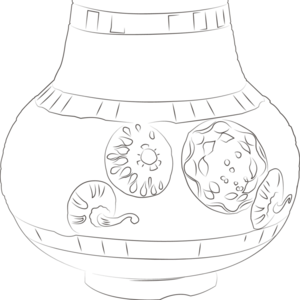
After beginning his career in this field in 1903, creating small bowls from fine glass paste stamped in a mold, he developed a particular technique for thick glass paste, molded using the lost-wax method, which allowed him to produce larger pots and vases from the 1910s onward. Gradually, his glass pastes revealed greater transparency and nuances of color. At the same time, his art objects followed the stylistic evolution of the period, moving from the naturalism of Art Nouveau to the refined, stylized, and geometric designs of Art Deco.
After 1929, to cope with the economic crisis that severely impacted the sale of his works, Décorchemont developed an original technique for stained glass using pâte de verre set in cement. The first panels, sometimes mounted as fire screens or intended for religious buildings, met with great success in the 1930s. Abandoning his production of decorative arts after the Second World War, he devoted himself primarily, until the end of his life, to creating figurative stained glass windows in pâte de verre for numerous churches in the Eure region that had suffered war damage. In 1956, he created the Saint Paul stained glass window for the chapel of the Conches hospice. At the request of the City of Conches, he also created, in 1962, a large stained glass window depicting the town's main monuments.