
At the end of the 19th century, an New Art – Art nouveau - emerged, drawing its sources of inspiration from nature.
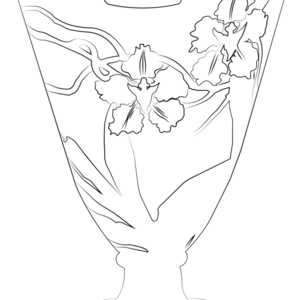
While embracing the modern technologies of glass and color chemistry developed in the industrial field, the glassmakers of the late 19th century favored the virtues of craftsmanship. By drawing their inspiration from nature, they developed a new style, breaking away from the Historicism of the 19th century, whose multifaceted and international movement also made its mark in art glass.
In France, glass art then evolved at the pace of artists like Émile Gallé or Ernest Leveillé and manufactories such as Daum, Legras, or Muller, which now signed their pieces. In Paris as in Nancy, glassmakers overflowed with imagination to create decorative art objects, whose shapes and decorations were inspired by fauna and flora.
In the heart of Europe, the Bohem glass factories also produce art glass characterized by sinuous shapes inspired by nature. Several of them, such as Loetz or Pallme-König & Habel, also develop iridescent surface decorations. At the same time, glass art is also enriched during this period by the research of a polychrome sculptor, Henry Cros, who developed pâte de verre, a material also used by a few other French artists of the early 20th century.