
In the field of art glass, the end of the 19th century is also marked by the discovery and use of a new material: glass paste
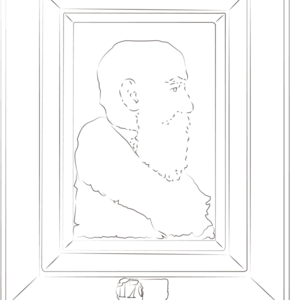
This discovery is due to the research of a versatile artist with a passion for polychromy, Henry Cros, who at the beginning of the 1880s invented a technique for molding glass powders in refractory molds that were destroyed after firing, allowing him to create bas-reliefs decorated with scenes inspired by antiquity, mythological themes, and sometimes portraits. After gaining recognition at the 1889 Universal Exposition, where he presented several creations, including probably the bas-relief L’Homme de profil, the State granted him in 1891 an annual stipend and a workshop at the Sèvres Manufacture to further develop his technique.
In this creative context linked to the Sèvres Manufacture and following in the wake of Cros, other artists ventured to experiment with this material and apply it to the production of decorative art objects. This is the case with Albert Dammouse, who, as early as 1897, developed an enamel paste stamped in open refractory molds to create small cups decorated with naturalistic and animal motifs; with Amalric Walter, who in 1903 made his first glass paste objects before putting his skills at the service of the Daum manufacture; and finally with François Décorchemont, who also created his first fine glass pastes from 1903 onwards.
Parallel to his industrial activities located on the Franco-Belgian border, Georges Despret also took an interest in glass paste, producing various modeled cups and sculptures at the beginning of the 20th century.