
Starting in 1918, the Schneider brothers began producing art objects in glass, which met with great success in both France and America
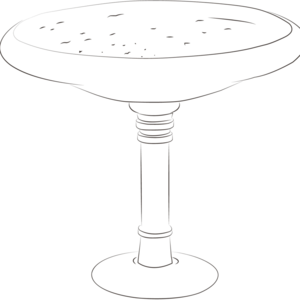
After working for the Daum factory in Nancy, Charles and Ernest Schneider bought a glassworks in Épinay-sur-Seine in 1913 to develop their own production of glass art objects. While the war delayed their activities, they resumed significantly in 1918 with the creation of several hundred designs conceived by Charles Schneider. Encompassing vases, bowls, lamps, and even stained-glass windows for civic buildings, these art objects were grouped into two distinct artistic and commercial lines: Schneider and Le Verre français (French Glass).
Characterized by vibrant, powerful, and contrasting colors, and by naturalistic, stylized, and geometric motifs that perfectly embody the Art Deco style of the interwar period, the Schneider brothers' creations enjoyed resounding success in Paris at the 1925 International Exhibition of Decorative Arts, and were subsequently exported en masse across the Atlantic. Although severely impacted by the 1929 crisis, the glassworks continued operations into the early 1930s before ceasing them definitively in 1939.
Having fallen into oblivion, this artistic production was gradually rediscovered in the 1980s by a few enthusiasts, among them the painter and engraver, Barlach Heuer (1930-2019). In 2018, he and his children donated a large part of his collection to the Conches Glass Museum; the collection comprises nearly 130 objects, which are displayed in rotation in this room.